

Beyond "Beauty Math": What Actually Makes a Product Worth Your Money?
As beauty consumers demand more transparency around value, price per gram has become the internet's favourite shortcut. Here's why it's not enough.

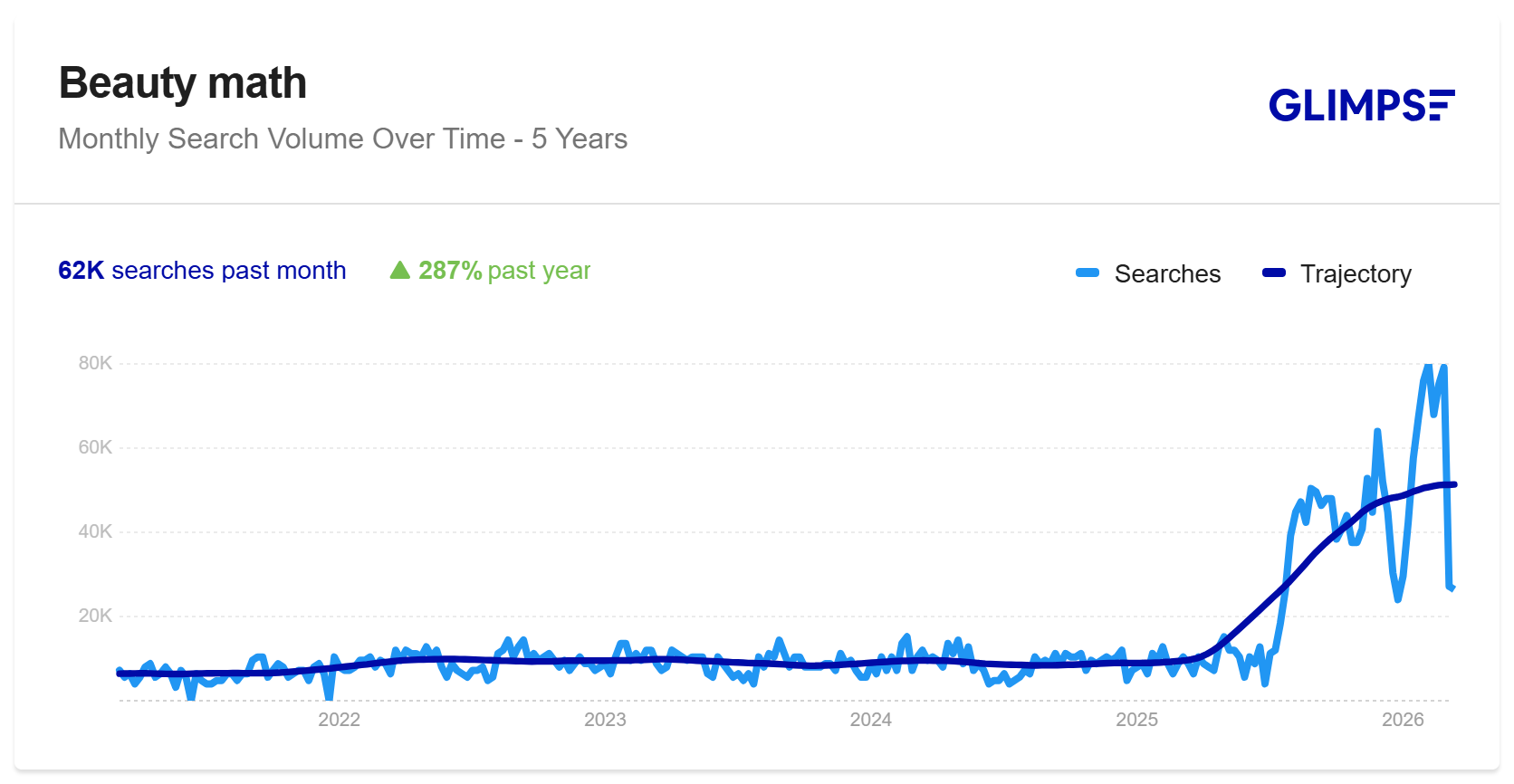
In an era of dupes, trade-downs, and relentless value scrutiny, beauty consumers are done paying premium prices without proof. Sixty-three percent don’t believe premium brands outperform mass ones (BoF-McKinsey State of Fashion: Beauty Volume 2, 2025). And with inflation still shaping spending habits across every market, the question on everyone’s lips — consciously or not — is the same: is this actually worth my money?
That question has sparked a new trend in the beauty space: using price per gram as a shortcut to decode value. Creators like Rachel Wiseman (@rawmakeup) have built entire content franchises around it, sharing spreadsheets that categorize hundreds of products by price per gram so consumers can scan a whole category and make a fast call. It’s democratic, it’s calculable, and in a category where prices range from €10 to €100 for what looks like the same product in a different jar, the appeal of a clean, universal number makes complete sense.
But here’s the thing—price per gram is not wrong. It’s just incomplete. Rachel’s spreadsheets are genuinely useful as a starting point. But they measure weight. They say nothing about whether the product inside the jar actually performs, how long it will last you, or how it makes you feel every time you use it. And those three things are where the real value conversation begins.
Price per gram tells you how much product you’re buying. It tells you nothing about whether that product is actually worth buying.
That distinction matters. A lot. And I’d argue it matters more right now than at any other point in recent beauty history.
Why This Conversation Is Happening Now
The numbers behind this shift are significant. According to the BoF-McKinsey State of Fashion: Beauty Volume 2 (2025), mass and masstige brands now hold 68% of the global skincare market— up five percentage points in five years. The rise of K-beauty, challenger brands like E.l.f. and The Ordinary, and the explosive growth of TikTok Shop have collectively dismantled the assumption that higher price means better product.
This is not a recession blip. This is a structural shift. The executives know it too. According to the BoF-McKinsey Beauty Executive Survey 2025, the number one theme expected to shape the beauty industry in the next few years — cited by 56% of executives — is increased consumer scrutiny on perceived value for money.
Not AI.
Not sustainability.
Not Gen Z.
Value scrutiny.
The industry is bracing for exactly the conversation that price per gram has started. The question is whether brands are ready to answer it properly.
Price per gram has stepped in to fill that gap. It gives people a sense of control in a category that has historically been opaque about pricing logic. But the metric was never designed for beauty. It was designed for commodities—products that are essentially interchangeable. Gold. Coffee. Rice. Products where more really does mean more.
Beauty products are not commodities. And the second you treat them like they are, you lose the entire story.
Why this Metric Is Not Enough
Here’s what price per gram can’t tell you.
It can’t tell you about efficacy: whether the formula actually does what it claims.
It can’t tell you about durability: how many times you’ll actually get out of it before it runs out.
And it can’t tell you about experience: how the product makes you feel every time you use it.
It’s like judging a coffee by how much liquid is in the cup. An espresso and a watered-down americano are not the same drink. With coffee, you taste that difference immediately. With beauty, it’s hidden inside the formula and the performance — and that’s exactly where price per gram goes silent.
A Better Framework: The Three Things I Actually Look At
I’m not here to throw price per gram out entirely. I’m here to put it in its place—as one input in a broader picture, not the final answer. Here are the three factors I use alongside it.
1. Price Per Use
Not how much product is in the bottle. How many times you’ll actually use it before it runs out.
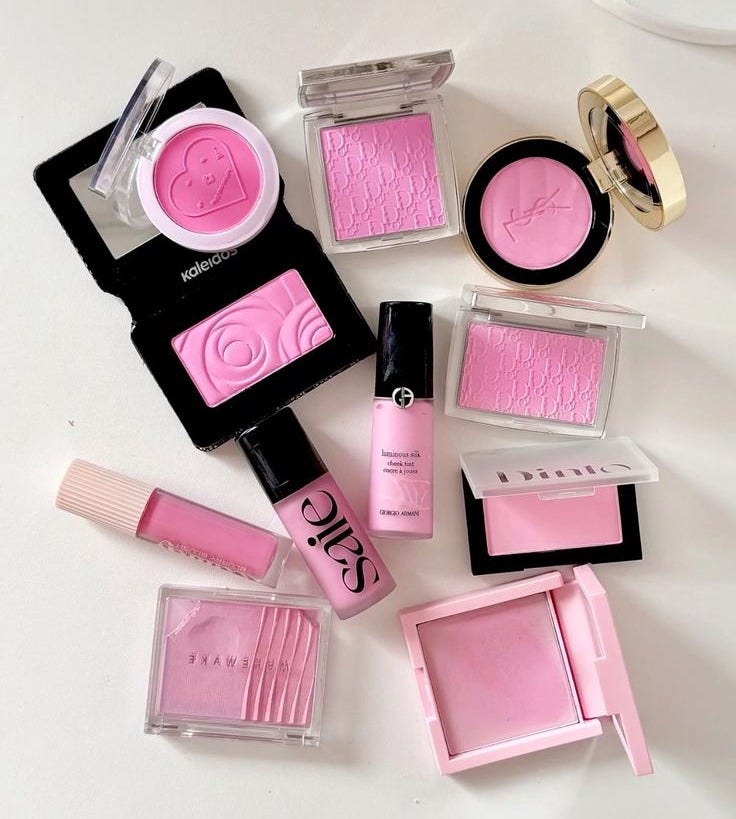
This calculation accounts for something price per gram is completely blind to: dispensing efficiency. A pump serum wastes almost nothing. A jar product loses material to oxidation, to finger-scooping, to the gram that stays stuck at the bottom. A highly pigmented blush requires a fraction of the product per application compared to a sheer, chalky formula — and will outlast it by months.
The calculation is simple: price ÷ estimated number of uses. Or for repurchase frequency: (price ÷ weeks of product life) × 52 to get your annual spend. A “cheap” product repurchased every five weeks is often more expensive annually than a premium product lasting six months. Price per gram will never surface that.
How long a product lasts you is always more honest than how much of it you bought.
2. Performance Credibility
Does it actually do what it claims to do?
This sounds obvious. It isn’t. The gap between a claim on the packaging and a result on your face is one of the defining tensions in modern beauty — and it’s precisely why 63% of consumers have stopped giving premium brands the benefit of the doubt (BoF-McKinsey State of Fashion: Beauty Volume 2, 2025).
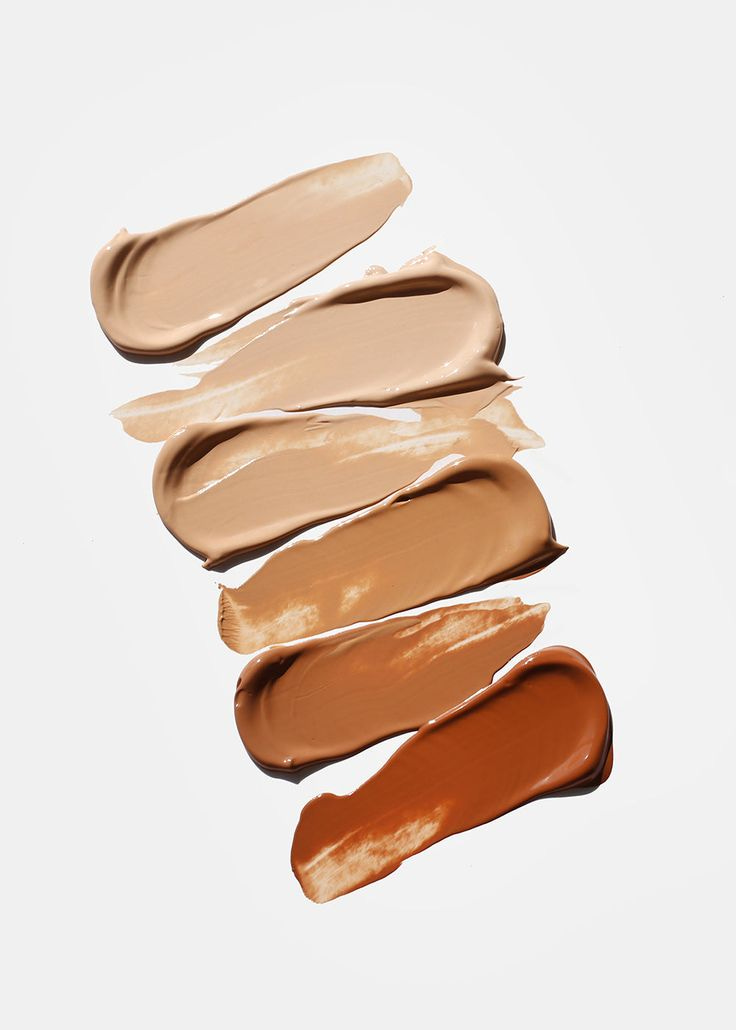
A matte foundation that promises a long-lasting result and is pretty much gone two hours in is not worth your money. Regardless of what it cost per gram. The price is irrelevant if the performance isn’t there.
3. Sensory and Experience
This is the factor that gets dismissed most often — usually framed as vanity, as paying for packaging, as something a savvy shopper should see through. I’d push back on that.
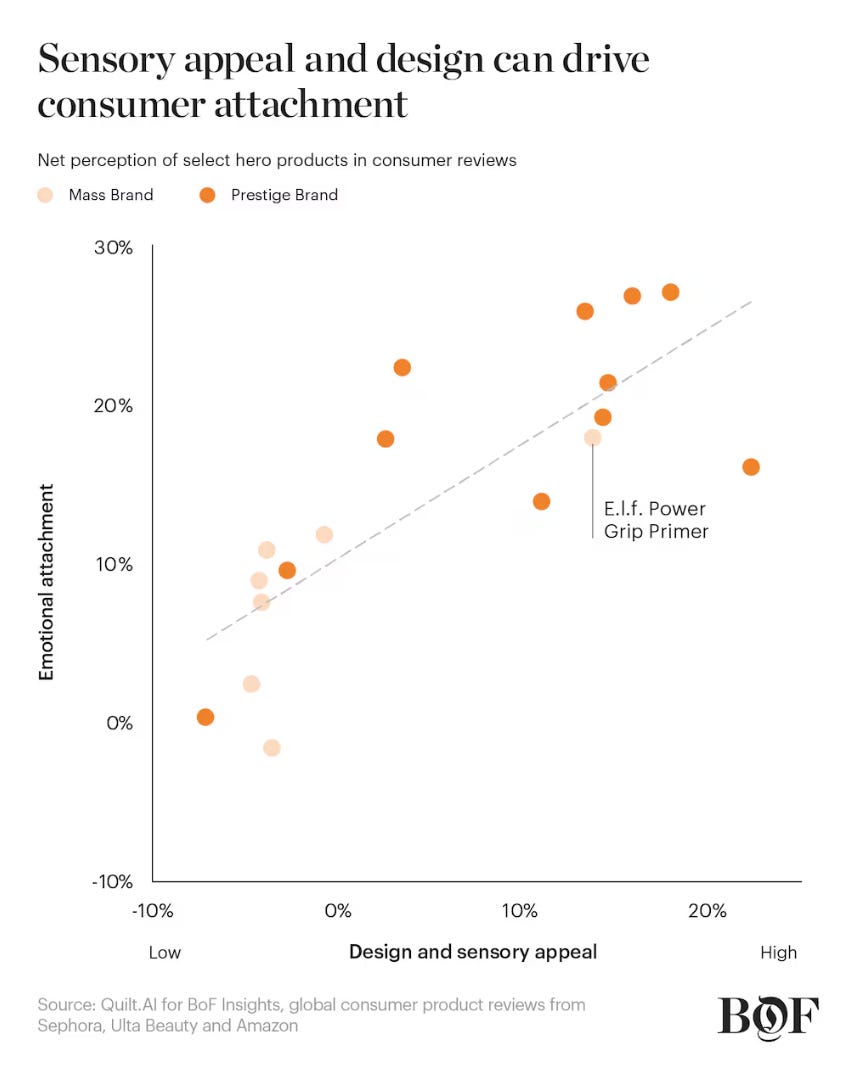
Proprietary analysis of consumer reviews across Sephora, Ulta, and Amazon found a direct correlation between sensory appeal — texture, scent, packaging functionality, application experience — and emotional attachment scores (Quilt.AI for BoF Insights, 2025). Higher-priced hero products consistently outperformed mass equivalents on this dimension. Not because luxury packaging is inherently better, but because the product experience shapes whether you use something consistently. And consistency is what actually makes beauty products perform.
A product you’re emotionally attached to is one you actually finish. A product you finish most likely delivers value.
The Strategic Implication
For consumers: these three factors are not official industry metrics. They’re thinking frameworks. But combined with price per gram, they give you something no single number ever could — a complete picture of what a product is actually worth to you. Not to the algorithm. Not to the comment section. To you, in your routine, with your skin, your lifestyle, your budget.
For brands: the shift happening right now is not just about price sensitivity. It’s about value legibility. Consumers are getting better at asking the right questions — and brands that can’t answer them clearly are losing ground to mass players that can. The opportunity isn’t to fight the metric. It’s to reframe the conversation around the dimensions of value that actually differentiate you: clinical proof, longevity, sensory experience, ingredient integrity.
Price per gram will always be part of the equation. But it was never the whole story. It’s time beauty stopped treating it like it was.
What do you actually look at when you’re deciding if a beauty product is worth your money? I’d genuinely love to know, drop it in the comments below!
Cheers,
Chiara
About Chiara
Chiara Ferrante is a Beauty Brand Strategist and Creative Consultant specialising in retail education, research and insight translation, and strategic launch consultancy. Follow her on TikTok and Instagram @simplyputcreative.